

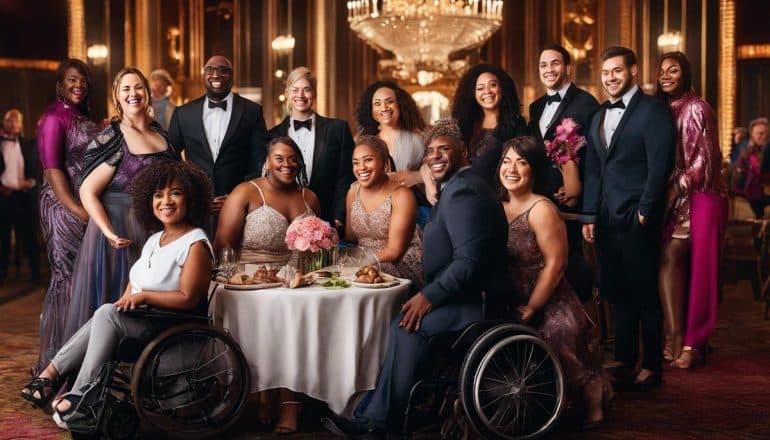
In the journey of life, we all seek companionship and love, irrespective of our abilities or disabilities. Navigating the dating landscape can come with its unique challenges for everyone; however, these challenges can get more layered when one or both parties involved live with a disability. This article offers insightful and practical advice to help people with disabilities successfully manage these challenges. The following areas will be deeply explored: understanding individual abilities and challenges, effectively communicating about disabilities, accessible date planning and establishing healthy relationships. By providing thoughtful guidance based on real-life scenarios, this article will serve as a helpful tool in shattering any misconceived limitations and fostering a fulfilling dating experience.
Understanding Individual Challenges and Abilities
Title: The Incredible Journey of Dating When You or Your Partner Has a Disability
Picture this: butterflies are fluttering in your stomach, you’re all dressed up, ready for that first meet-and-greet or the hundredth, you’re about to delve into the intriguing, exciting, and sometimes nerve-wracking world of dating. And if you or yours has a disability, that adds another layer to the journey – it’s unique, it’s brave, and absolutely inspiring to others. Disability comes with its own set of unique challenges and abilities, it’s part of the richness of the human experience. For many, dating can be a tricky maze to navigate, but for those with disabilities, it often requires an extra dash of bravery and smart navigation skills. So let’s dive in, shall we?
Understanding
is the hallmark of any relationship, and when dating someone with a disability, this becomes more prominent. Disabilities differ – they can be physical, psychological, cognitive or sensory. Every individual’s experience with their disability is unique, which means one-size-fits-all advice won’t work. It’s crucial to recognize these personal experiences and adapt accordingly.Often, the biggest challenge people with disabilities face in dating scenarios is societal perceptions and stigmas. Perceptions such as “they can’t enjoy life,” or “they are always dependent on others,” are not true and can hamper the formation of a loving and healthy relationship. Breaking these stereotypes one day at a time, actively rejecting them, is essential to creating a respectful and understanding dating environment.
Communication is the cornerstone of any successful relationship, and doubly so when a disability is involved. Don’t hesitate to discuss the disability, but also remember that your loved one is much more than his or her disability. Open a casual conversation about it. You might ask about the daily challenges or how it impacts life. You might also want to discuss how to be supportive in various scenarios.
It’s not about feeling inspired by their “bravery” or “strength” in dealing with their disability. This notion, otherwise known as ‘inspiration porn,’ can often devalue the actual person and their experiences. Viewing them as an individual first rather than defining them by their disability is essential.
In the dating world, everyone has their insecurities, strengths, likes, and dislikes. The same goes for those with disabilities. They might have a knack for humor, a love for the cinema, a prowess in cooking! It’s beautiful to discover these traits, enjoy their company, share common interests, and build a relationship based on mutual respect, love, and understanding.
Supporting them doesn’t merely mean taking care of their needs or being conscious about their disability. It’s about acknowledging their dreams, ambitions, talents, and realizing that they can equally contribute to the relationship. The ups and downs are just another part of the journey we call love!
Most importantly, remember that everyone deserves love. When it comes to dating and disability, the advice is strikingly simple: be understanding, be honest, be encouraging, be respectful. With a generous sprinkling of laughter and shared memories, you are well on your way to creating a meaningful relationship that extends beyond the bounds of disabilities.
Dating when you or your partner has a disability can be a bit like an adventure in an enchanted forest – it’s intriguing, it’s different, and it’s wonderfully unique. It might be challenging, but all good things in life often are. By understanding and celebrating these unique abilities, supporting each other, and fundamentally, by being compassionate human beings, this dating journey can be a richly rewarding experience!

Photo by daywalkerhn on Unsplash
Communication about Disability
Navigating the Dating World: A Comprehensive Guide for Individuals with Disabilities
Despite the numerous strides we have made as a society, misconceptions concerning disability and dating still run rampant, and can often interfere with the process of finding love. This narrative requires re-crafting, and a large part of this involves addressing these misconceptions head-on. To fully appreciate the potential of every individual’s love life, we must deconstruct such myths and present an honest depiction of disability in a dating context.
Inclusion is the key when it comes to dating. It’s essential that individuals with disabilities are included in all aspects of pubic narrative, dating included. Their stories shouldn’t be a mere footnote or an afterthought, but at the epicenter of our focus. By normalizing the inclusion of individuals with disabilities in dating scenarios, we can challenge those stigmas, stereotypes, and above all, prejudices that society clings on to.
Expanding the definition of beauty is another significant piece of the puzzle. We live in a world where beauty standards have long been skewed towards impressions that fail to include many diverse and valuable forms of beauty. It’s about time we recalibrate our beauty standards to encompass the wide array of attributes that make us uniquely attractive individuals. Beauty comes in many shapes, sizes, and abilities. A person’s disability can add to their charm and distinctiveness and should not be perceived as a deterrent to dating.
Coming to terms with one’s disability can be a life-changing journey of self-acceptance. It’s crucial for people with disabilities to express their needs fearlessly, assert their desires, and shape their dating strategies accordingly. Confidence and self-worth are game-changers in the dating arena. Once accepted, anyone’s unique circumstances can be transformed into strengths. A positive self-image attracts others who appreciate you for who you are, not what they perceive you should be.
In the realm of dating, no conversation about disability can be complete without addressing the role of honesty. Honesty plays a pivotal role, not only in revealing one’s disability to a prospective partner but in acknowledging one’s desires, dreams, and expectations. While it’s essential to be upfront about your disability, it is equally important to communicate what you’re looking for in a relationship. A durable foundation of trust can be built when honesty is an integral part of a conversation.
Lastly, remember, everyone has the right to experience the joy, companionship, and profound connection that comes with a loving relationship. Disabilities don’t eliminate the potential for love, joy or connection. Instead, they may bring an awareness and appreciation for the deeper, more meaningful aspects of a relationship that others might overlook. So go forth confidently, embrace your individuality, and remember, love knows no boundaries.
Accessible Date Planning
Sparking Joyful Connections: Accessible & Enjoyable Date Planning for People with Disabilities
In the landscape of dating and relationships, creating an inclusive and respectful atmosphere is pivotal. This principle is particularly important for individuals with disabilities, providing a platform where everyone feels valued and connected. Here are some practical tips on how to create accessible and enjoyable dates for people with diverse abilities.
Firstly, it is essential to challenge misconceptions. While popular culture often presents stereotypical views of dating, the reality is uniquely diverse and beautiful. Relationships involving people with disabilities are not an exception to love and companionship. Acknowledging this truth opens up a world of opportunities for enjoyable and accessible dates.
Being understanding goes beyond empathetic conversations. For date planning, understanding could translate to selecting an accessible location, considering food options for those with dietary complications, or planning activities that accommodate physical constraints. Open conversations pave the way for shared experiences that bring happiness and increase bonding.
Embracing a comprehensive understanding of beauty is vital. Beauty isn’t just a physical trait – it’s an amalgamation of charisma, character, compassion, and so much more. Acknowledging this is instrumental in creating a space that fosters genuine connections. It fosters a positive sense of self-confidence in individuals with disabilities, allowing them to shine brightly without constraints.
One essential component of dating is maintaining utmost honesty. While presenting your best self, it is vital not to overshadow the reality. When dating people with disabilities, be open about the disability. This could involve discussing any special requirements, potential challenges, and the support needed. Honesty, wrapped in respect and acceptance, cultivates a safer and more enjoyable dating experience.
Inclusion is an integral aspect of planning accessible dates. Activities need not be overly complex or extravagant. The focus should be on fostering genuine connections and shared joy. Consider simple yet meaningful activities that can be enjoyed together. This may be a tranquil picnic in an accessible park, watching a movie with subtitles, or attending an art exhibit with braille descriptions.
Lastly, remember that everyone has the right to experience love, joy, and connection. This is true irrespective of abilities or disabilities. In dating scenarios, this paramount right lays the blueprint for constructing an inclusive environment. It dictates the norms of respect, acceptance, and real companionship.
In conclusion, planning an accessible and enjoyable date for people with disabilities is rooted in understanding, acceptance, respect, and the willingness to debunk societal misconceptions. The attempt to level the playing field in dating and relationships symbolizes a collective effort towards a fairer society where everyone gets an equal shot at experiencing love and happiness.


Building Healthy Relationships
Building quality connections: The role of caregiver, friends, and community
In fostering healthy relationships for individuals with disabilities, the roles of caregiver, friends, and community becomes significant. Their involvement can serve as a supportive network that helps in fostering mutual respect, understanding, and shared interests in a relationship. Always remember that people with disabilities can, and do, form meaningful relationships, like anyone else, given the right support and empathy.
Look beyond the disability: View each other for who you truly are
When we look past the disability, we see each person as an individual, with their own dreams, values, and characteristics. This epiphany can create a healthier dating environment for people with disabilities, encouraging equal footing, authenticity, and a shared bond developed over shared interests, values, and experiences.
The power of resilience: Celebrating differences and revealing the strength within
People with disabilities often carry an unwavering spirit of resilience that can add a unique dimension to their relationships. This strength often radiates, reminding us all that obstacles can be overcome and that physical or cognitive abilities do not define one’s capacity to love and be loved.
Empowerment and personal growth: Creating a space for continuous development
In every relationship, regardless of disability, it is essential to allow space for personal growth and encouragement to be the best version of oneself. Just as we all have aspirations and dream of accomplishment, so do individuals with disabilities. As such, relationships should foster growth, support dreams, and lend strength to each other’s ambitions.
Creating an inclusive space: Making way for experiences that are beautiful and fulfilling
It’s not just about being physically present and participating; true inclusion is about ensuring that people with disabilities have a fulfilling and enriching experience. This includes creating safe, comfortable, and inclusive spaces where they can be their true selves.
Facilitating accessibility: Dating does not have to be conventional
Dating scenarios should not be limited by accessibility challenges. There are a myriad of creative and engaging date ideas that are disability-friendly, where both parties can enjoy an enriching experience. Every date can be uniquely crafted, considering the specific needs and comfort of the individual.
At the end of the day, fostering a healthy relationship for individuals with disabilities is about understanding, respect, and love. It involves looking past societal stereotypes, focusing instead on mutual interests, shared joy, and valuing each other beyond physical prowess. Through this, we can truly grasp the essence of inclusivity and understanding in relationships – because every single person deserves love and the joy of sharing life with someone else.
The quest for love and companionship is universal, and the right to an enriching dating experience should be equally universal regardless of individual challenges and abilities. As these insights and tips suggest, it’s entirely feasible for people with disabilities to have fun, accessible, and meaningful dating experiences. Fostering an understanding of one’s unique abilities and challenges, effective communication about disabilities, thoughtful date planning, and building healthy relationships are all critical aspects of this process. It is hoped that these guidelines will empower individuals with disabilities, and their prospective partners, to approach the dating world with optimism, preparedness, and greater confidence.
